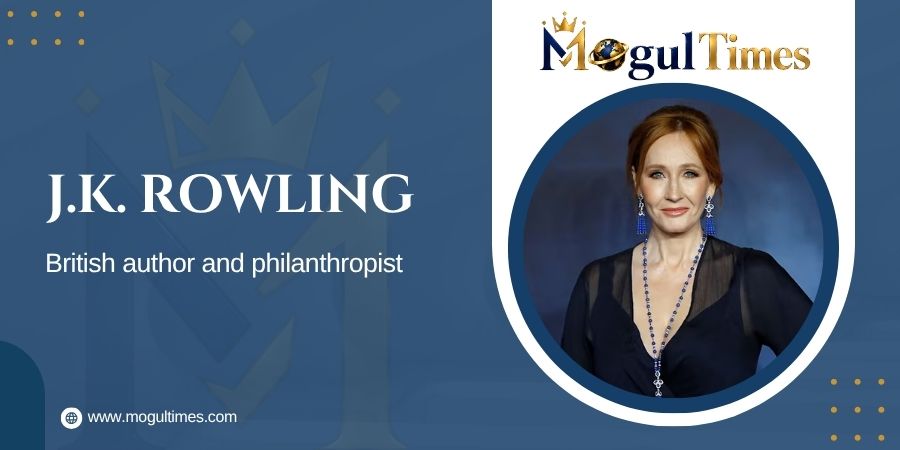
J.K. Rowling’s journey proves that repeated rejection does not define success.
J.K. Rowling faced rejection from 12 publishers before Harry Potter and the Philosopher’s Stone was finally accepted by Bloomsbury Publishing in 1997. What began as a manuscript repeatedly turned down became one of the most successful literary franchises in history, selling more than 600 million books worldwide, inspiring blockbuster films, theme parks, and a global fan community.
Success stories often appear effortless in hindsight, but Rowling’s path was anything but easy. Long before she became one of the world’s best-known authors, she was navigating unemployment, financial hardship, and personal struggles while trying to convince publishers that a story about a young wizard deserved a chance.
Her experience remains one of publishing’s most powerful examples of resilience, persistence, and belief in creative work.
What happened before Harry Potter found a publisher?
Before publication, Rowling’s manuscript was rejected by 12 publishing houses. Editors questioned its commercial appeal, particularly whether children would read such a lengthy fantasy novel from an unknown author.
During the early 1990s, children’s publishing looked very different than it does today. Fantasy novels were considered a niche category, and publishers often preferred shorter, safer stories.
Some common reasons the manuscript struggled included:
- Rowling was an unpublished author.
- The manuscript was longer than typical children’s books.
- Fantasy was viewed as commercially risky.
- Publishers doubted its mass-market appeal.
Despite these setbacks, Rowling continued submitting her manuscript instead of abandoning the project.
Eventually, literary agent Christopher Little believed in the novel and began approaching publishers on her behalf.
How did Bloomsbury decide to publish Harry Potter?
Bloomsbury accepted the manuscript after the chairman’s eight-year-old daughter reportedly read the opening chapters and immediately wanted to continue. Her enthusiasm helped convince the publisher that young readers would connect with the story.
This decision changed publishing history.
The initial print run was remarkably small:
| Detail | Information |
|---|---|
| First publication | 1997 |
| Publisher | Bloomsbury |
| Initial print run | Approximately 500 hardback copies |
| Author credit | J.K. Rowling |
| Country | United Kingdom |
Interestingly, Rowling published under the initials “J.K.” instead of using “Joanne.” The publisher believed that boys might be more likely to read the book if the author’s gender was less obvious—a reflection of publishing assumptions at the time.
Few could have predicted what followed.
Why was Harry Potter different from other children’s books?
Harry Potter combined relatable characters, imaginative world-building, emotional storytelling, mystery, humor, and themes of friendship and courage in a way that appealed to both children and adults.
The series introduced readers to an expansive magical universe while keeping its emotional core grounded in universal experiences.
Several factors distinguished the books:
- Rich world-building with consistent rules.
- Memorable and evolving characters.
- Complex moral choices.
- Mystery-driven storytelling.
- Humor balanced with darker themes.
- Emotional growth throughout the series.
Rather than talking down to younger readers, Rowling trusted them with sophisticated plots and meaningful emotional conflicts.
This approach helped redefine expectations for children’s literature worldwide.
How did J.K. Rowling transform publishing history?
J.K. Rowling transformed modern publishing by proving that children’s literature could become a global cultural phenomenon, attracting readers of every age and generating unprecedented commercial success.
The Harry Potter series achieved milestones that few books in history have matched.
Global impact includes:
- More than 600 million books sold worldwide
- Translation into 80+ languages
- Eight blockbuster films
- Theme parks in multiple countries
- Stage productions
- Video games
- Merchandise generating billions of dollars
The books also inspired renewed interest in reading among young audiences, with many educators crediting the series for encouraging children to read longer novels voluntarily.
Publishers subsequently invested far more heavily in middle-grade and young adult fantasy fiction.
What lessons can writers learn from J.K. Rowling’s rejection story?
The biggest lesson is that rejection reflects one opinion—not the final value of creative work. Rowling’s experience demonstrates that persistence, revision, and patience often matter more than immediate approval.
Her journey highlights several practical principles:
1. Rejection is part of the process
Many bestselling authors faced repeated rejection before finding success.
2. Keep improving your work
Publishing success usually follows continuous editing, feedback, and refinement rather than a perfect first draft.
3. Find advocates
Literary agents and supportive editors can dramatically improve an author’s chances.
4. Believe in your audience
Publishers initially underestimated readers’ appetite for fantasy. Rowling never stopped believing children would embrace her story.
5. Long-term persistence wins
Success often arrives after years—not weeks—of effort.
Did financial struggles influence Rowling’s writing journey?
Yes. Rowling wrote much of the first Harry Potter novel while living on limited income as a single mother in Edinburgh. Those difficult years strengthened her determination to finish the story.
She has openly discussed experiencing:
- Financial hardship
- Depression following personal challenges
- Divorce
- Raising her daughter alone
- Uncertainty about her writing career
Rather than ending her ambitions, these circumstances motivated her to continue writing whenever possible, often working in cafés while her daughter slept.
Her experience demonstrates that creative progress is possible even during difficult periods, although it requires extraordinary persistence.
What makes J.K. Rowling’s story still relevant today?
J.K. Rowling’s publishing journey remains relevant because it challenges the assumption that early rejection predicts long-term failure. Her story is widely cited in business, education, entrepreneurship, and creative industries as an example of resilience.
Today’s creators face similar challenges:
- Authors seeking literary agents
- Entrepreneurs pitching investors
- Designers presenting new ideas
- Musicians approaching record labels
- Startup founders building innovative products
Initial rejection often reflects market timing, subjective preferences, or risk perception—not necessarily the quality of the idea itself.
The Harry Potter story continues to remind creators that perseverance can outperform early skepticism.
The numbers behind Harry Potter’s global success
The commercial success of Harry Potter remains one of the greatest achievements in publishing history.
| Achievement | Approximate Figure |
|---|---|
| Publishers rejected | 12 |
| Books sold | 600+ million |
| Languages translated | 80+ |
| Film adaptations | 8 |
| First publication | 1997 |
| Initial print run | Around 500 copies |
| Worldwide readers | Hundreds of millions |
These achievements illustrate how dramatically a single publishing decision reshaped modern literature.
Why does the rejection story matter beyond publishing?
The significance of Rowling’s early rejection extends beyond literature because it demonstrates how innovation is often overlooked before becoming widely accepted.
Many industries reward persistence because breakthrough ideas rarely receive universal support immediately.
The Harry Potter story is frequently referenced in discussions about:
- Entrepreneurship
- Innovation
- Leadership
- Personal development
- Creative careers
- Business resilience
Its broader message is simple: rejection is a stage, not necessarily an outcome.
Frequently Asked Questions
How many publishers rejected J.K. Rowling?
Before Harry Potter was accepted, J.K. Rowling received rejection from 12 publishers before Bloomsbury agreed to publish the novel in 1997.
Which publisher accepted Harry Potter first?
Bloomsbury Publishing became the first publisher to release Harry Potter and the Philosopher’s Stone after recognizing its potential.
Why did publishers reject Harry Potter?
Many publishers considered children’s fantasy a risky commercial category and questioned whether young readers would embrace such a long novel from an unknown author.
How successful did Harry Potter become?
The series has sold more than 600 million copies worldwide, been translated into more than 80 languages, inspired eight films, and become one of the most successful entertainment franchises ever created.
Conclusion
J.K. Rowling transformed one of publishing’s most famous rejection stories into an unprecedented global success. Twelve publishers said no before one said yes—and that single opportunity changed children’s literature forever. Her journey demonstrates that persistence, continuous improvement, and belief in a meaningful idea can eventually overcome repeated setbacks. For aspiring writers and creators, her story remains a lasting reminder that today’s rejection does not determine tomorrow’s legacy.
Also Read: Albert Einstein: From School Struggles to Scientific Genius