
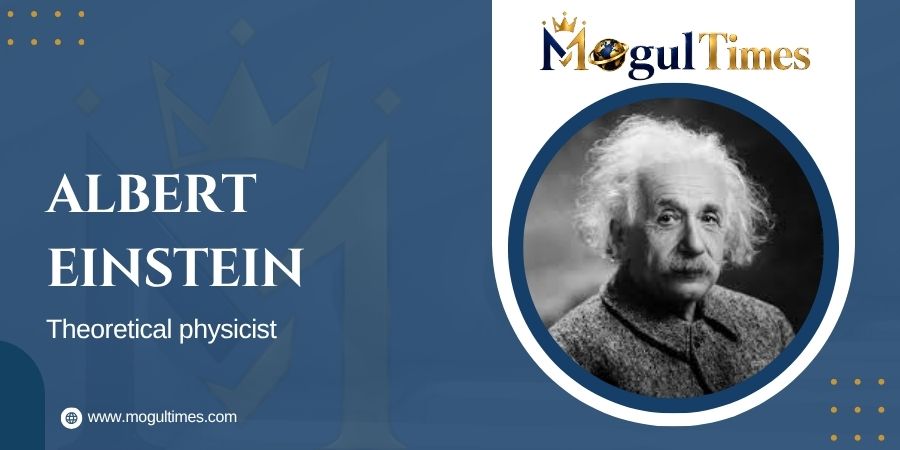
Many people believe success begins with perfect grades, but Albert Einstein proved otherwise. Although he struggled with aspects of traditional schooling and disliked rigid education systems, he grew into one of history’s greatest scientists. His groundbreaking theories transformed physics, changed humanity’s understanding of space and time, and continue to influence technology, astronomy, and scientific research today.
Who Was Albert Einstein?
Albert Einstein was a German-born theoretical physicist who developed the Theory of Relativity and made revolutionary contributions to modern physics. His discoveries changed scientific thinking and earned him the 1921 Nobel Prize in Physics for explaining the photoelectric effect rather than relativity.
Born on March 14, 1879, in Ulm, Germany, Einstein displayed curiosity from an early age. Contrary to popular myths, he was not a poor student overall, but he often struggled within traditional classroom systems that emphasized memorization and strict discipline over creativity.
Quick Facts
| Fact | Details |
|---|---|
| Born | March 14, 1879 |
| Birthplace | Ulm, Germany |
| Profession | Theoretical Physicist |
| Nobel Prize | Physics (1921) |
| Famous Theory | Theory of Relativity |
| Famous Equation | E = mc² |
| Died | April 18, 1955 |
His work became the foundation for much of modern theoretical physics.
Did Albert Einstein Really Struggle in School?
Einstein’s challenges in school were less about intelligence and more about adapting to rigid educational systems. He questioned authority, disliked repetitive learning, and preferred solving problems independently.
One of the biggest misconceptions is that Einstein failed mathematics as a child. Historical records show this is false. He excelled in mathematics and physics but disliked subjects that relied heavily on memorization.
His educational struggles included:
- Frustration with strict teaching methods
- Frequent disagreements with teachers
- Lack of interest in rote learning
- Preference for independent thinking
- Difficulty fitting into conventional classrooms
Rather than viewing education as a set of rules, Einstein believed learning should encourage curiosity.
Why Traditional Schools Didn’t Suit Him
Einstein often asked questions beyond the curriculum. Teachers sometimes viewed this as challenging authority rather than intellectual curiosity.
His independent personality eventually became one of his greatest strengths in scientific research.
How Did Albert Einstein Become a Revolutionary Scientist?
Einstein succeeded because he combined deep curiosity with relentless independent study. Instead of accepting established ideas, he questioned fundamental assumptions about nature.
After graduating from the Swiss Federal Polytechnic in Zurich, Einstein struggled to secure a university position. He eventually accepted a job at the Swiss Patent Office in Bern.
Ironically, this ordinary job gave him uninterrupted time to think deeply about physics.
During his time at the patent office, he developed ideas that would forever change science.
His daily routine often included:
- Reviewing patent applications
- Studying scientific papers
- Conducting thought experiments
- Discussing ideas with close friends
- Writing research papers during his spare time
This period demonstrated that groundbreaking discoveries do not always emerge from prestigious laboratories.
The Miracle Year That Changed Physics
In 1905, often called Einstein’s “Annus Mirabilis” or Miracle Year, he published four scientific papers that transformed modern physics.
These papers introduced ideas that challenged centuries of scientific understanding.
Major Discoveries in 1905
| Discovery | Why It Matters |
|---|---|
| Photoelectric Effect | Helped establish quantum theory |
| Brownian Motion | Provided evidence for atoms |
| Special Relativity | Changed concepts of space and time |
| Mass-Energy Equivalence | Introduced E = mc² |
Few scientists in history have produced such influential work within a single year.
The equation E = mc² became one of the world’s most recognized scientific formulas, demonstrating that mass and energy are interchangeable.
What Is the Theory of Relativity?
The Theory of Relativity explains how space, time, gravity, and motion behave, especially at extremely high speeds and around massive objects.
Einstein introduced two major theories:
Special Relativity (1905)
Special Relativity states that:
- The speed of light is constant.
- Time slows as objects move faster.
- Space and time are connected.
- Mass increases with velocity.
General Relativity (1915)
General Relativity expanded these ideas by explaining gravity.
Instead of describing gravity as an invisible force, Einstein showed that massive objects bend the fabric of space-time.
Today, General Relativity helps scientists understand:
- Black holes
- Gravitational waves
- Planetary motion
- GPS satellite accuracy
- Expanding universe models
Modern astronomy still relies heavily on Einstein’s predictions.
Why Is Albert Einstein Important Today?
Einstein’s discoveries continue to shape modern technology, medicine, astronomy, engineering, and space exploration.
Many everyday technologies depend on principles connected to his research.
Examples include:
- GPS navigation systems
- Nuclear energy
- Medical imaging
- Laser technology
- Satellite communications
- Space missions
- Quantum computing research
Without relativity corrections, GPS systems could accumulate positioning errors of several kilometers each day.
This practical impact demonstrates how theoretical science eventually becomes everyday technology.
What Challenges Did Einstein Face Beyond School?
Einstein experienced professional rejection, financial struggles, political persecution, and personal hardships before becoming internationally recognized.
Some major obstacles included:
Early Career Difficulties
- Unable to obtain academic positions immediately after graduation
- Worked outside academia
- Published papers without major institutional support
Political Challenges
After Adolf Hitler rose to power in Germany in 1933, Einstein, who was Jewish, emigrated to the United States.
He later joined the Institute for Advanced Study in Princeton, where he continued his scientific work.
Personal Difficulties
Einstein also experienced:
- Family challenges
- Public scrutiny
- Scientific criticism
- Global political tensions
Despite these obstacles, he remained committed to scientific discovery and humanitarian causes.
Lessons We Can Learn from Albert Einstein
Einstein’s life demonstrates that curiosity, persistence, and independent thinking often matter more than early academic perfection.
His journey offers valuable lessons for students, researchers, entrepreneurs, and innovators.
Key Takeaways
- Curiosity can outperform memorization.
- Failure does not define future success.
- Independent thinking drives innovation.
- Persistence often beats natural talent alone.
- Great ideas require patience and deep focus.
- Questioning accepted beliefs leads to discovery.
His story reminds us that unconventional learners can make extraordinary contributions.
Real-World Example of Einstein’s Lasting Influence
One of the clearest examples of Einstein’s impact is the Global Positioning System (GPS).
GPS satellites orbit Earth at high speeds while experiencing weaker gravity than clocks on Earth’s surface.
According to Einstein’s theories:
- Time moves differently in varying gravitational fields.
- Fast-moving clocks tick at different rates.
Engineers must correct these tiny timing differences using relativity equations.
Without these corrections, GPS accuracy would deteriorate rapidly, making navigation unreliable.
This demonstrates how theoretical physics directly improves billions of people’s daily lives.
Why Does Albert Einstein Remain a Global Icon?
Einstein became more than a scientist because he represented intellectual curiosity, peaceful advocacy, and fearless questioning of accepted ideas.
His influence extends beyond science into education, philosophy, leadership, and innovation.
Reasons for his lasting reputation include:
- Revolutionary scientific discoveries
- Nobel Prize-winning research
- Lifelong commitment to learning
- Advocacy for peace and human rights
- Enduring influence on modern technology
More than seventy years after his death, universities, research institutes, and scientific organizations continue building upon his work.
Frequently Asked Questions
Was Albert Einstein actually bad at school?
No. He excelled in mathematics and physics but disliked rigid educational systems and memorization-based learning.
Why did Albert Einstein win the Nobel Prize?
He received the 1921 Nobel Prize in Physics for explaining the photoelectric effect, which became a cornerstone of quantum theory.
What is Albert Einstein’s most famous equation?
His best-known equation is E = mc², showing the relationship between mass and energy.
How does Einstein’s work affect everyday life?
His theories enable technologies such as GPS navigation, satellite communications, nuclear energy, and many areas of modern scientific research.
Conclusion
The story of Albert Einstein is not one of effortless brilliance but of relentless curiosity, resilience, and independent thought. His struggles within traditional education never limited his potential. Instead, they encouraged him to think differently, ultimately leading to discoveries that reshaped physics and transformed our understanding of the universe. His legacy continues to inspire students, scientists, and innovators to question assumptions, pursue knowledge fearlessly, and recognize that true genius often begins with curiosity rather than conformity.
Also Read: Sal Khan Academy Story: From Tutor to Global Impact