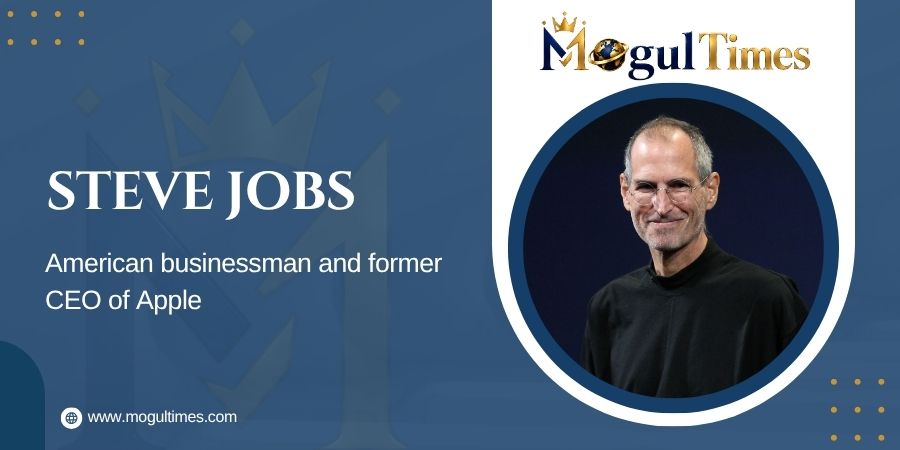
Steve Jobs transformed one of the biggest setbacks in business history into one of the greatest corporate comebacks ever recorded. After being removed from the company he co-founded in 1985, he spent more than a decade building new ventures, returned to Apple in 1997, and led it from the brink of bankruptcy to becoming one of the world’s most influential technology companies.
His journey demonstrates that innovation, resilience, and long-term vision can outweigh even the most public professional failures.
Why Was Steve Jobs Fired from Apple?
Steve Jobs was forced out of Apple in 1985 after a power struggle with the company’s board and then-CEO John Sculley. Although Jobs co-founded Apple, disagreements over leadership style, product strategy, and financial performance ultimately led to his removal from day-to-day operations.
Apple had experienced tremendous early success with the Apple II and the Macintosh. However, the original Macintosh struggled commercially despite its revolutionary design.
Key reasons behind his departure included:
- Conflicts with CEO John Sculley
- Internal disagreements over company direction
- Declining Macintosh sales
- Pressure from Apple’s board to stabilize operations
- Concerns about Jobs’ demanding management style
Although widely described as being “fired,” Jobs later explained that he had effectively lost operational control of the company he helped build.
Apple Before the Departure
Apple was already an innovative company, but rapid growth exposed leadership challenges. The company needed experienced corporate management while simultaneously trying to maintain its culture of innovation.
During the early 1980s:
| Milestone | Impact |
|---|---|
| Apple II success | Established Apple as a personal computing leader |
| Macintosh launch (1984) | Introduced graphical user interfaces to mass consumers |
| Growing competition | IBM and Microsoft increased market pressure |
| Leadership conflicts | Created uncertainty throughout the organization |
The clash between visionary leadership and corporate management became one of Silicon Valley’s defining business stories.
What Did Steve Jobs Do After Leaving Apple?
Instead of retiring, Steve Jobs immediately began building new companies that later became critical to Apple’s future success. His years away became a period of learning, experimentation, and personal growth.
NeXT
Jobs founded NeXT in 1985.
Its goals included:
- Building high-end workstations
- Developing advanced operating systems
- Creating software for universities and research institutions
Although NeXT computers sold in relatively small numbers, its operating system proved revolutionary.
Years later, Apple acquired NeXT for approximately $429 million in 1997. More importantly, NeXT’s software became the technological foundation of:
- macOS
- iOS
- iPadOS
- watchOS
- tvOS
Without NeXT, Apple’s modern software ecosystem would likely not exist.
Pixar Changed Entertainment
Steve Jobs also invested in Pixar, helping transform computer animation forever. In 1986, he purchased Pixar from Lucasfilm for approximately $10 million.
Pixar achieved remarkable milestones:
- Released Toy Story (1995), the world’s first fully computer-animated feature film
- Produced blockbuster franchises
- Won numerous Academy Awards
- Revolutionized digital filmmaking
Eventually, Disney acquired Pixar in 2006 in a deal valued at approximately $7.4 billion, making Jobs Disney’s largest individual shareholder at the time.
How Did Steve Jobs Return to Apple?
Apple brought Steve Jobs back in 1997 after years of declining sales, financial losses, and strategic confusion. The acquisition of NeXT unexpectedly became the path that returned him to the company he founded.
Apple’s situation in the mid-1990s included:
- Falling market share
- Multiple unsuccessful products
- Financial instability
- Weak leadership transitions
- Declining consumer confidence
Initially serving as an advisor, Jobs soon became interim CEO—famously calling himself the “iCEO.”
His return marked the beginning of Apple’s dramatic turnaround.
What Changes Did Steve Jobs Make After Returning?
Jobs simplified Apple’s product strategy, rebuilt its design philosophy, and created an innovation-focused culture. Rather than producing dozens of confusing product lines, he emphasized simplicity and excellence.
His early priorities included:
- Cutting underperforming products
- Reducing operational complexity
- Strengthening design standards
- Recruiting world-class engineering talent
- Building a unified ecosystem
One of his most influential decisions was introducing a simple product matrix focused on consumer and professional desktops and laptops.
This clarity transformed Apple’s development process.
The Products That Built a Global Giant
Apple’s comeback was driven by a series of category-defining products that reshaped multiple industries. Each launch reinforced Apple’s reputation for combining hardware, software, and services into seamless experiences.
Major milestones included:
iMac (1998)
- Revitalized Apple’s brand
- Introduced bold industrial design
- Returned profitability
iPod (2001)
- Revolutionized portable music
- Combined with iTunes to transform digital media
iTunes Store (2003)
- Changed legal digital music distribution
- Created a new ecosystem for consumers
iPhone (2007)
The iPhone fundamentally changed smartphones by combining:
- Touchscreen computing
- Internet access
- Apps
- Multimedia
- Mobile communication
The product became one of the most successful consumer electronics devices ever created.
App Store (2008)
Developers gained a global marketplace that fueled:
- Millions of applications
- New business models
- Mobile software innovation
iPad (2010)
Apple established an entirely new tablet computing category.
Why Did Steve Jobs’ Leadership Work the Second Time?
Experience made Steve Jobs a more focused and disciplined leader during his second tenure at Apple. While still demanding exceptionally high standards, he became more strategic in aligning design, engineering, and business goals.
Several principles defined his leadership:
Vision Before Competition
Jobs focused on creating products customers would love rather than reacting to competitors.
Simplicity Wins
Apple consistently removed unnecessary complexity.
Examples included:
- Minimalist hardware
- Intuitive software
- Simple retail experiences
Integration Matters
Unlike many competitors, Apple controlled:
- Hardware
- Software
- Services
- Retail
- Customer support
This integration created a consistent user experience.
Design Is a Business Strategy
Industrial design became central to Apple’s identity rather than an afterthought.
How Did Apple’s Value Change After the Comeback?
Apple evolved from a struggling technology company into one of the world’s most valuable businesses. The turnaround is frequently cited in business schools as one of the greatest corporate recoveries ever achieved.
Some notable milestones include:
| Year | Milestone |
|---|---|
| 1997 | Apple near bankruptcy |
| 1998 | Returned to profitability |
| 2001 | iPod launched |
| 2007 | iPhone introduced |
| 2010 | iPad released |
| 2018 | First U.S. public company to reach $1 trillion market value |
| 2022 | Market capitalization briefly exceeded $3 trillion |
Apple today generates hundreds of billions of dollars in annual revenue and serves customers across nearly every major global market.
What Can Entrepreneurs Learn from Steve Jobs?
The story of Steve Jobs proves that failure can become a foundation for greater success when combined with continuous learning and bold execution. His career offers practical lessons that extend beyond technology.
Key takeaways include:
- Failure is often temporary.
- Innovation requires long-term thinking.
- Customer experience creates competitive advantage.
- Great products solve real problems simply.
- Strong company culture supports sustainable growth.
- Focus is often more valuable than expansion.
Business leaders frequently study Apple’s transformation because it demonstrates how strategic clarity can revive an entire organization.
Lasting Legacy Beyond Apple
Steve Jobs left an influence that extends far beyond Apple products. His ideas reshaped multiple industries, including personal computing, smartphones, music, film, digital publishing, retail, and software development.
His broader impact includes:
- Popularizing touchscreen smartphones
- Advancing digital animation through Pixar
- Transforming music distribution
- Influencing modern product design
- Inspiring generations of entrepreneurs
- Establishing ecosystem-driven technology businesses
Many technology companies continue adopting principles first popularized during Apple‘s resurgence.
Frequently Asked Questions
Why was Steve Jobs removed from Apple?
Steve Jobs lost operational control after disagreements with Apple’s leadership and board in 1985. Strategic conflicts with CEO John Sculley ultimately led to his departure.
What companies did Steve Jobs create after leaving Apple?
He founded NeXT and invested heavily in Pixar, both of which became enormously successful and significantly influenced technology and entertainment.
How did Steve Jobs save Apple?
He simplified Apple’s product lineup, strengthened design, introduced groundbreaking products such as the iMac, iPod, and iPhone, and rebuilt the company’s innovation culture.
Why is Steve Jobs’ comeback considered historic?
His return transformed Apple from a struggling company into one of the world’s most valuable and influential businesses, making it one of the greatest corporate turnaround stories ever documented.
Conclusion
The journey of Steve Jobs from being pushed out of Apple to leading its remarkable revival remains one of business history’s most powerful examples of resilience and visionary leadership. His willingness to learn from failure, pursue innovation through NeXT and Pixar, and return with a clearer strategic focus reshaped not only Apple but the global technology industry. For entrepreneurs, executives, and innovators alike, his story is a lasting reminder that setbacks do not define success—what matters is the ability to return stronger, think differently, and execute with purpose.
Also Read: Jan Koum WhatsApp Journey: From Hardship to a $19 Billion Legacy