
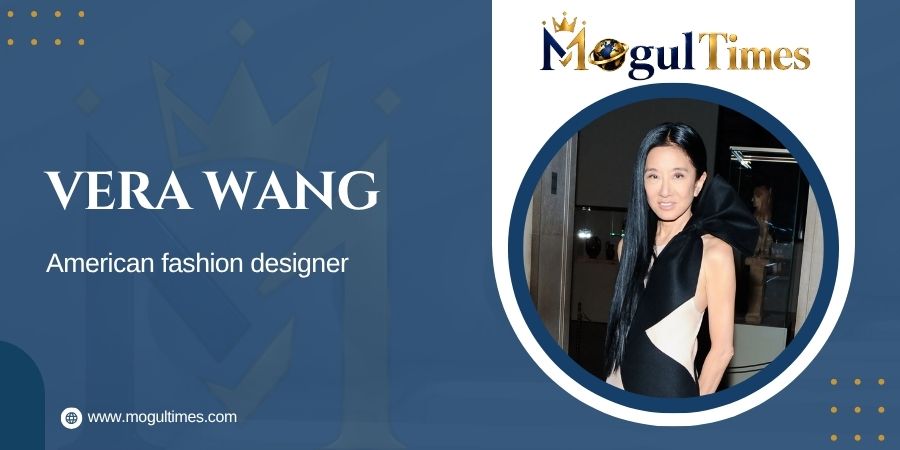
Vera Wang’s inspiring journey is defined by a career pivot that transformed an Olympic disappointment into one of fashion’s most recognizable success stories. A competitive figure skater who failed to qualify for the 1968 U.S. Olympic team, Wang eventually built a distinguished career at Vogue and Ralph Lauren before launching her own bridal label at age 40. Her story demonstrates how an abandoned first ambition can become the foundation for an entirely different form of excellence.
Born in New York City in 1949, Wang grew up with a strong connection to both art and performance. She began figure skating at age eight and competed at the 1968 U.S. Figure Skating Championships. Although she did not reach the Olympics, the sport left a lasting influence on the way she understood movement, proportion, presentation and clothing.
Her eventual success was not an overnight transformation. Wang spent more than a decade developing expertise inside the fashion industry before taking the risk of creating her own company. That experience became crucial when she entered bridal fashion in 1990 and began challenging conventional ideas about what wedding dresses could look like.
How did Vera Wang turn an Olympic disappointment into a new career?
Vera Wang turned the disappointment of missing the 1968 Olympic team into a career in fashion by redirecting the discipline and visual instincts she had developed through figure skating. She later built professional credibility at Vogue and Ralph Lauren, giving her the editorial, commercial and design experience needed to recognize an opportunity in bridal fashion rather than simply starting a business without industry expertise.
Wang’s early skating career mattered because figure skating combines athletic performance with visual storytelling. Costumes are not merely decorative; they must move with the athlete, complement choreography and communicate a particular aesthetic.
That intersection fascinated Wang from an early age.
According to British Vogue, Wang began skating at eight, competed in the 1968 championships and eventually entered fashion after failing to make the Olympic team. She later described skating as a combination of music, dance, athletics, choreography and costumes.
The Olympic setback therefore did not erase the skills she had developed. It redirected them.
Her experience offers an important distinction between failure and redirection:
- The original goal: Become an Olympic figure skater.
- The setback: She did not qualify for the 1968 U.S. Olympic team.
- The transferable skills: Discipline, performance awareness, aesthetics and attention to detail.
- The new direction: Fashion journalism and design.
- The eventual outcome: A globally recognized fashion brand.
That sequence is central to understanding Wang’s career. The most important decision was not simply accepting that one dream had ended; it was recognizing that the abilities developed while pursuing it could be used somewhere else.
What did Vera Wang do before becoming a designer?
Before establishing her own label, Vera Wang spent roughly 16 years at Vogue and later worked as a design director at Ralph Lauren, building the industry knowledge that would eventually support her independent career. The Council of Fashion Designers of America says Wang became the youngest fashion editor at Vogue at age 23 and remained there for 16 years before moving to Ralph Lauren.
Her transition into fashion was therefore gradual.
After graduating from Sarah Lawrence College, Wang entered the editorial world rather than immediately becoming a designer. At Vogue, she developed an understanding of trends, styling, photography, luxury brands and the commercial mechanics of fashion.
Her career path included several distinct stages:
| Career stage | What it gave Wang |
|---|---|
| Competitive figure skating | Understanding of movement, performance and costume |
| Vogue | Editorial judgment and fashion-industry credibility |
| Ralph Lauren | Direct experience inside a major fashion company |
| Bridal design | Opportunity to develop her own creative identity |
| Independent brand | Control over design, positioning and business strategy |
Wang left Vogue in 1987 to join Ralph Lauren, where she worked as a design director. Two years later, her personal life provided the catalyst for an even bigger professional change.
In 1989, while preparing for her wedding to Arthur Becker, Wang struggled to find a wedding dress that matched her taste. Instead of accepting the available choices, she designed her own gown and had it made for her.
That personal problem revealed a larger market opportunity.
Why did Vera Wang enter bridal fashion at age 40?
Vera Wang entered bridal fashion at 40 because she saw a gap between the wedding dresses available to women and the sophisticated, modern designs she believed they wanted. After designing her own wedding gown in 1989, she recognized that bridal fashion could be treated as serious fashion rather than a separate category dominated by conventional silhouettes and decoration.
Wang opened her first bridal boutique on Madison Avenue in New York in 1990.
The timing is significant. She was not a young designer fresh out of school trying to establish herself. She already had years of experience at two major fashion institutions and had developed a sophisticated understanding of luxury consumers.
The CFDA records that Wang opened her first flagship store in 1990 and helped introduce a new fashion perspective to bridal wear.
Her entry strategy also reflected a practical business insight: solve a problem that she personally understood.
Instead of asking, “How can I become famous as a designer?” Wang effectively asked a more useful question:
“Why isn’t bridal fashion offering the kind of design I want to wear?”
That question became commercially powerful.
Her designs emphasized refined construction, modern proportions, sophisticated fabrics and a less traditional approach to bridal dressing. The brand gradually became associated with luxury wedding fashion and later expanded beyond bridal gowns.
How did Vera Wang build her reputation in fashion?
Vera Wang built her reputation by combining editorial expertise, high-fashion design principles and a distinctive understanding of women’s occasionwear. Her breakthrough came from establishing authority in bridal fashion and then expanding that aesthetic into eveningwear, ready-to-wear and other lifestyle categories.
The brand’s development was not limited to wedding dresses.
According to the CFDA, Wang eventually expanded into ready-to-wear, footwear, eyewear, fragrance, flowers, china and crystal, silver and gifts, bedding and other categories.
That expansion illustrates an important principle in luxury branding: a successful designer often sells an aesthetic rather than a single product.
Wang’s aesthetic became recognizable through several characteristics:
- Sophisticated silhouettes
- Dramatic but controlled proportions
- Detailed construction
- Modern interpretations of traditional femininity
- Strong attention to movement
- A balance between romance and contemporary design
Her earlier experience with skating also returned in an unexpected way.
Rather than leaving figure skating completely behind, Wang eventually designed costumes for elite skaters. Nancy Kerrigan wore her designs at the 1992 and 1994 Winter Olympics, creating a striking reversal in Wang’s personal story.
She had once wanted to reach the Olympics as a skater.
Years later, her designs reached the Olympic ice.
That transformation gave her career an unusually circular narrative: the sport that had once represented an unfinished dream became part of the professional identity she ultimately built.
When did Vera Wang become an established fashion authority?
Vera Wang became an established fashion authority through decades of sustained work rather than a single breakthrough, with major recognition including the 2005 CFDA Womenswear Designer of the Year award and the 2013 Geoffrey Beene Lifetime Achievement Award. These honors confirmed that her influence extended beyond bridal fashion into the wider American fashion industry.
Her rise also demonstrates why professional reinvention is rarely as sudden as it appears from the outside.
When Wang opened her bridal boutique in 1990, she already possessed:
- 16 years of experience at Vogue
- Senior design experience at Ralph Lauren
- A strong understanding of luxury fashion
- A personal understanding of the bridal market
- A clear design point of view
The visible reinvention happened at 40, but the preparation had been taking place for years.
That distinction makes the Vera Wang inspiring journey more useful than a simple “late bloomer” story. Wang did not abandon one career and magically become successful in another. She accumulated expertise across multiple environments and eventually combined those experiences into a business of her own.
What can entrepreneurs learn from Vera Wang’s reinvention?
The most practical lesson from Vera Wang’s career is that a setback can become valuable when the skills developed along the original path are transferred into a new opportunity. Her story shows the power of combining existing expertise with an unmet customer need rather than starting completely from zero.
A failed goal does not erase accumulated skills
Wang did not become a designer despite her skating background; in many ways, she became a stronger designer because of the visual and performance principles she learned through skating.
Age does not determine the value of a career pivot
Launching a major fashion business at 40 challenged the idea that creative careers must begin in youth. Wang had already built professional authority before creating her own name.
Personal frustration can reveal market demand
Her difficulty finding the right wedding dress was not merely a shopping problem. It helped her recognize that other women could be searching for the same alternative.
Experience can be more valuable than speed
Wang’s years at Vogue and Ralph Lauren gave her a foundation that a younger entrepreneur might not have possessed. Her later launch benefited from knowledge accumulated over decades.
Reinvention works best when it preserves identity
Wang changed industries within the broader world of aesthetics, design and fashion rather than making an unrelated leap. Her previous interests remained relevant.
How did figure skating influence Vera Wang’s design philosophy?
Figure skating influenced Vera Wang’s design philosophy by teaching her to think about clothing as part of movement, performance and visual expression rather than as static decoration. Her later work for Olympic and elite skaters demonstrated that her earliest artistic interest remained connected to her fashion career even after she moved away from competitive skating.
That connection became particularly visible through her work with figure skaters including Nancy Kerrigan, Michelle Kwan, Evan Lysacek and Nathan Chen. Wang’s skating costumes became another expression of the same relationship between body, movement, music and clothing that had fascinated her as a young athlete.
In 2009, Wang was inducted into the U.S. Figure Skating Hall of Fame for her contribution to costume design.
The recognition was meaningful because it connected two seemingly separate chapters of her life.
The young skater who could not make the Olympic team eventually became a designer whose work appeared on Olympic ice.
That is more than a career pivot. It is an example of skills returning in a different form.
Why is Vera Wang’s story still relevant today?
Vera Wang’s inspiring journey remains relevant because modern careers increasingly involve reinvention, nonlinear progression and the transfer of skills between industries. Her experience shows that professional success does not always follow the original plan and that a later start can become an advantage when it is supported by accumulated expertise.
Wang’s career also challenges a common assumption about entrepreneurship: that founders must identify their lifelong calling early and pursue it without interruption.
Her story suggests a different model.
Build expertise. Recognize change. Identify the gap. Then act.
The result was a business that moved from bridal fashion into a broader luxury lifestyle identity.
Her professional recognition continued long after her 1990 launch. The CFDA named her Womenswear Designer of the Year in 2005 and awarded her the Geoffrey Beene Lifetime Achievement Award in 2013.
Those milestones underline an important point: reinvention is not simply about making a dramatic change once. It is about continuing to evolve after the initial breakthrough.
Frequently Asked Questions
Did Vera Wang make the Olympic figure skating team?
No. Vera Wang competed at the 1968 U.S. Figure Skating Championships but did not qualify for the U.S. Olympic figure skating team. Her Olympic disappointment helped redirect her toward fashion, where she eventually built a major international career.
How old was Vera Wang when she started her fashion business?
Vera Wang was 40 when she launched her bridal business in 1990. Before becoming an independent designer, she had spent 16 years at Vogue and two years at Ralph Lauren, giving her extensive industry experience before entrepreneurship.
Why did Vera Wang start designing wedding dresses?
Wang entered bridal fashion after struggling to find a wedding dress that suited her taste for her 1989 wedding. She designed her own gown and recognized an opportunity to bring a more modern, fashion-oriented approach to bridalwear.
What is Vera Wang best known for?
Vera Wang is best known for transforming bridal fashion through sophisticated, contemporary wedding gowns and later expanding her design influence into eveningwear, ready-to-wear and multiple lifestyle categories. Her work has also had a lasting connection to figure skating costume design.
Conclusion: The career that came after the dream
The Vera Wang inspiring journey shows that missing one destination does not mean losing the ability to succeed. She did not become an Olympic figure skater, but the discipline and visual awareness developed on the ice became part of the foundation for a remarkable fashion career.
At 40, she turned a personal frustration into a business opportunity. Her experience at Vogue and Ralph Lauren gave her the knowledge to build rather than simply experiment, while her figure-skating background helped shape an instinct for movement, proportion and presentation.
Her story is ultimately about reinvention with purpose: the first dream may fail, but the skills gained while pursuing it can become the raw material for the next one.
For entrepreneurs, professionals and creatives facing a career transition, Wang’s path offers a powerful reminder: experience does not expire, and starting later does not mean starting from nothing.
Also Read: Ralph Lauren Success Story: From Ties to a Fashion Empire